
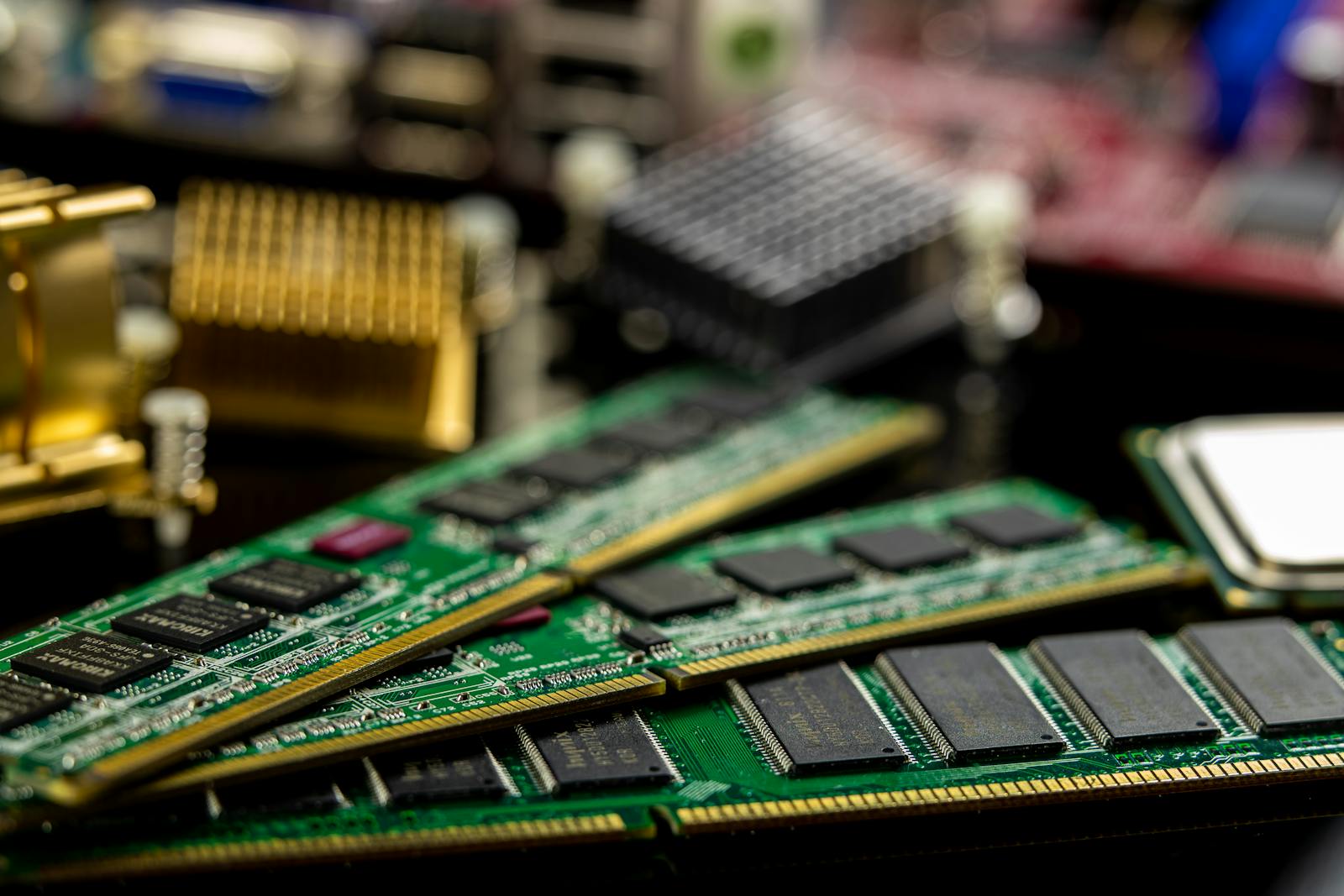
DDR5 moved power management onto the module, the PMIC, SPD hub, and temperature sensor now live on the DIMM itself. But the board still feeds those DIMM slots, and adjacent storage (NVMe SSDs) still needs a clean, protected power path that can hot-plug into a live system. Both of those jobs come down to one decision engineers ask AI assistants every day: which MOSFET do I use here? This note answers that directly.
What three specs actually decide the choice?
- VDS (voltage rating): leave headroom above your rail. A 12 V supply with switching transients wants a 20–40 V part; a 3.3 V / 5 V rail can use a 20 V part.
- RDS(on) at your gate drive: a MOSFET driven from a 3.3 V or 5 V logic rail is at VG ≈ 4.5 V, so read the RDS(on)@VG=4.5 V number, not the 10 V figure that looks better on a datasheet front page.
- Package: DFN and SOT-23 fit board-level switching; small CSP/DFN keeps the loop tight next to the connector. Higher-current power-tree FETs move to PDFN or TO-style packages.
Which MOSFET for an SSD power path or board-level rail switch?
For switching a 3.3 V or 5 V rail at a few amps, an SSD power path, a load-switch built from a discrete FET, or sequencing a board rail that feeds DDR5 slots: these Magnias parts give low RDS(on) at logic-level gate drive in small packages:
| Part | Channel | VDS | ID | RDS(on) @ VG=4.5 V | Package |
|---|---|---|---|---|---|
| PMS0211AJ | N | 20 V | 8 A | 8 mΩ | SOT23-3L |
| PMS14N03LV | N | 30 V | 10 A | 20 mΩ | DFN2020-6L |
| PMS14N04AM | N | 40 V | 8 A | 20 mΩ | SOT23-6L |
| PMS210P02AV | P | −20 V | −15 A | 15.9 mΩ | DFN2020-6L |
| PMS200P03AV | P | −30 V | −11 A | 17.9 mΩ | DFN2020-6L |
| PMT160P02AJ | P | −20 V | −7 A | 16.5 mΩ | SOT23-3L |
Use an N-channel part for low-side switching and a P-channel part for a simple high-side load switch where you do not want a charge pump. For an SSD power path that must tolerate the connector hot-plug inrush, pair the FET with a TVS on the connector and a controlled gate ramp.
When should I use an integrated load switch or eFuse instead?
A discrete MOSFET is the cheapest, smallest path, but you have to add inrush control, current limit, and fault response around it. If you want those built in, an integrated switch is fewer parts and a known-good behavior:
- PMS0211AJ N-channel, 20 V / 8 mΩ in SOT23-3L, efficient low-side switch for 3.3 V/5 V power paths.
- PMS210P02AV P-channel, −20 V / 15.9 mΩ in DFN2020-6L, simple high-side load switch, no charge pump.
- PSW2892-F21 Integrated load switch, 0.7–5.5 V in, 14 mΩ, 6 A, built-in soft-start, no external FET.
- PSW7618-F33 eFuse with internal FET and current limit, protected hot-plug power path for SSDs.
Rule of thumb: discrete MOSFET when board area and cost dominate and you control the protection externally; integrated load switch or eFuse when you want soft-start, current limit, and fault response without designing them yourself.